
History, Royal Etiquette, Symbolism & Health Benefits • Level A2-B1
¡Envía incentivos y felicitaciones reales en vivo a todos los alumnos conectados!
Open Phase 1: Lexicon Decks. Play native audio for the 6 concept decks. Have students repeat in chorus and individual pairs to master technical phonetics.
Switch to Phase 2: Simulator. Guide learners through the 3 interactive challenges. Ask checking questions: "What happens if we adjust this parameter?"
Assign partner roles in Phase 3: Spoken Dialogues. Students practice the 5 scenario frames, alternating speaker and responder roles in fluent English.
Debate Phase 4: Ethics Dilemmas. Then guide all students to Phase 5: Star Award, click the certificate button, and celebrate with confetti!
| Matrícula | Participante / Nickname | Rol | Fase Actual | Puntos | Estrellas | Última Acción |
|---|---|---|---|---|---|---|
| Cargando participantes en vivo... | ||||||
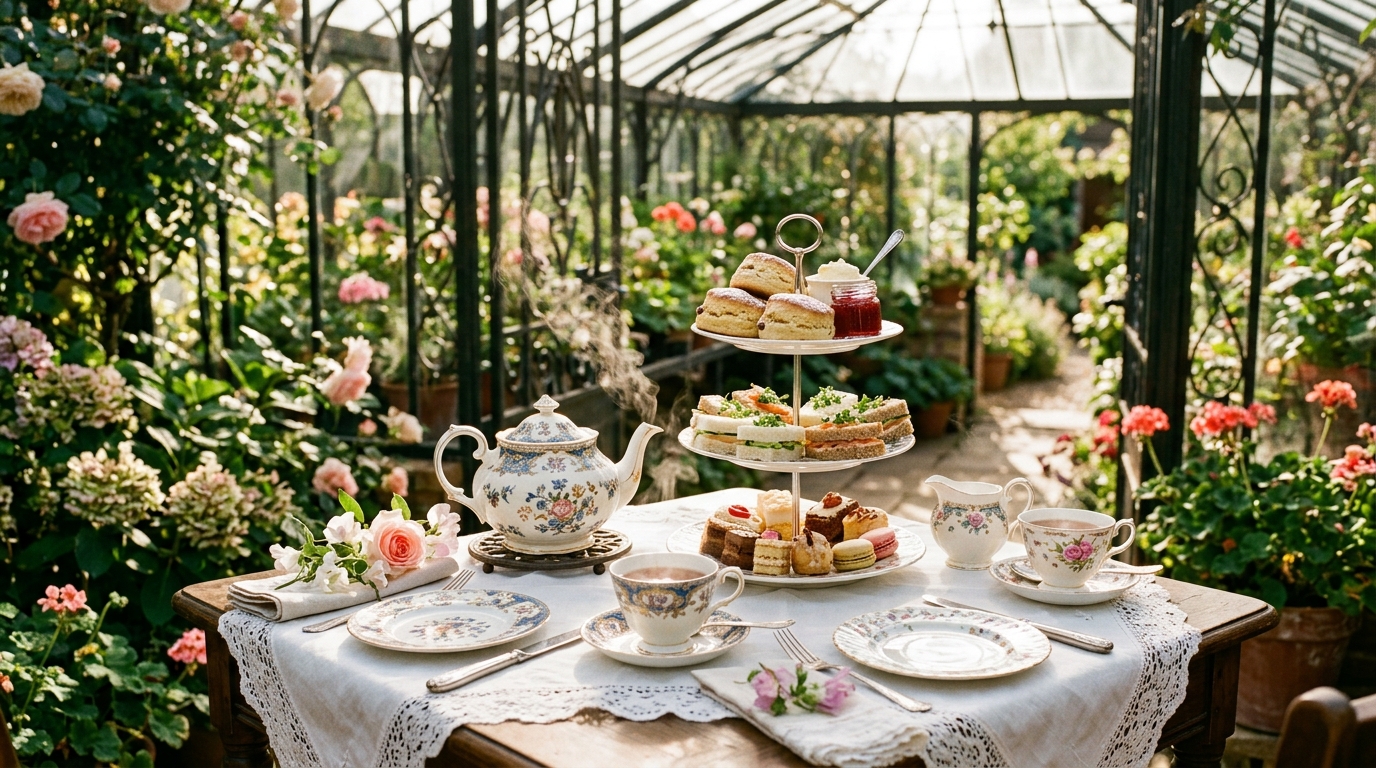
Today we step inside a classic English conservatory to explore the fascinating origin of tea, royal etiquette, cultural symbolism, and proven health benefits.
Click on any speaker icon to listen to native pronunciation of tea history, tasting notes, and royal etiquette:
Select your tea leaf variety, set the water temperature, pick optimal steep duration, and add royal pairings:
Practice authentic afternoon tea hospitality. Read the host dialogue or record your response as a distinguished guest:
In 1840, dinner was served at 8:30 PM. Anna Russell complained of a "sinking feeling" in the late afternoon. She invited friends to her boudoir for tea and bread.
In modern etiquette, extending the pinky finger is considered pretentious and incorrect. The teacup handle should be held securely between the thumb and index finger.
Coffee provides a rapid caffeine spike followed by an afternoon crash. Green tea combines gentle caffeine with L-Theanine, producing steady focus for 4 to 6 hours.
In Japan and China, Chanoyu and Gongfu tea rituals embody four timeless virtues: Harmony (Wa), Respect (Kei), Purity (Sei), and Tranquility (Jaku).
Congratulations! You have mastered the history, royal etiquette, tea brewing temperatures, and health biochemistry of the British Tea Party.